
You can buy industrial-grade shrink wrap from any supplier. You can even watch a few videos online and try to wrap a piece of equipment yourself. But here’s what those videos won’t teach you: the shrink wrap installation is what makes or breaks the protection.
Think of it this way. A raincoat is only useful if it fits properly and you zip it up all the way. Shrink wrap is the same. The material itself is just a starting point. The real value comes from knowing exactly how to apply it: how to read the shape of an object, where to seal, how much heat to use, and where the weak points are hiding. Get it wrong, and your expensive equipment is essentially wearing a loose poncho with missing buttons.
It’s Not Just Plastic. It’s Engineering.
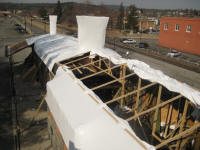
Proper shrink wrap installation requires a trained eye and practiced hands. You’re not just covering something up. You’re engineering a protective shell that has to survive wind, rain, road vibration, temperature swings, and sometimes even ocean spray.
Here’s what our experienced installers do that amateurs miss:
- We identify stress points first. Every object has corners, edges, and protruding parts. These are where the plastic will stretch thin or tear first. A professional knows how to reinforce those spots before they ever become a problem.
- We create a true seal. Moisture is sneaky. It finds pinholes, gaps, and loose edges. Proper heat shrinking creates a tight, uniform seal that doesn’t leave room for humidity to creep in. This is especially critical for VCI wrap, where the seal has to be airtight to trap the corrosion-inhibiting vapors inside.
- We understand airflow and condensation. A wrap that’s too loose flops around in transit and tears. A wrap that’s too tight can trap condensation against the equipment surface. Experienced installers know the sweet spot: enough tension to hold firm, but enough ventilation planning to prevent moisture buildup.
What Happens When Installation Fails?
We’ve seen it more times than we’d like. A company hires the lowest bidder, or tries to handle the wrap internally, and ends up with a mess.
Maybe the wrap tears loose during a highway haul, leaving the equipment exposed to road salt and debris. Maybe moisture got trapped inside, and six months later, the machinery comes out of storage covered in rust. Or maybe the wrap wasn’t properly sealed, and now the customer is looking at a repair bill that dwarfs the original shrink wrap quote.
These aren’t hypothetical stories. They’re real problems we’ve been called in to fix. And almost always, the root cause is the same: someone underestimated the skill required to do the job right.
Experience Shows Up in the Details
When our team shows up for a project, we don’t just start wrapping. We walk around the equipment. We look for sharp edges that need padding and check for crevices where moisture might hide. Then we choose the right material for the job (flame-retardant, VCI, BioShrink, or standard). And then we install with patience and precision, because rushing leads to mistakes.
Every helicopter, tank, industrial pipe skid, and historic building we’ve wrapped has taught us something. We’ve learned what works and what fails. That knowledge doesn’t come from a product manual. It comes from thousands of hours on the job.
Don’t Trust Your Assets to an Amateur
The cost difference between a professional installation and a cut-rate job is usually small. But the difference in protection? It’s enormous.
Your equipment has value. Replacement costs, project delays, and damaged reputations add up fast. When you hire a team that treats shrink wrap as an art form, not just a chore, you’re buying peace of mind.
Next time you need equipment protected, ask our team to do the install. Experience matters. We’ve got plenty to share.