
Aerospace and aviation companies deal with some of the most expensive, sensitive equipment on the planet. A single component can cost more than most people’s homes. And the margin for error is basically zero. So why are more and more of these companies turning to shrink wrap for protection? We’ve worked with clients in this industry for years, and we’ve seen the reasons firsthand. Here’s what’s driving the shift.
Protection from the Elements
Aircraft components, avionics, and ground support equipment don’t do well when exposed to the outdoors. UV rays degrade composite materials. Moisture causes corrosion on metal parts. Dust and debris work their way into sensitive openings.
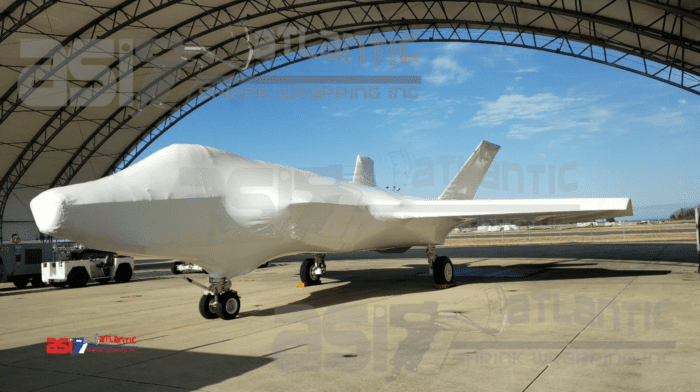
We’ve wrapped everything from wing trainers to engine components for aerospace clients. The wrap creates a sealed barrier that blocks it all. UV, rain, snow, dust, salt air, you name it. The equipment stays in the same condition it was in when we wrapped it.
That matters when a component might sit in a staging yard for months before installation. You can’t afford to open a crate and find rust or water damage. With shrink wrap, that doesn’t happen.
Foreign Object Debris Prevention
In aviation, FOD is a serious issue. A single stray piece of debris can damage an engine or cause a safety incident. That’s why aerospace companies are obsessive about keeping equipment clean and sealed.
Shrink wrap gives them a reliable barrier. We wrap the component completely, sealing it off from the surrounding environment. Nothing gets in. Nothing gets out. When the wrap comes off, the equipment is as clean as it was before.
We’ve also wrapped ground support equipment and tooling that gets stored outdoors between projects. The wrap keeps dust and debris out, so the equipment is ready to go when it’s needed.
Weatherproof Storage Without a Building
Hangar space is expensive. Not every company has room to store every component indoors. And building new storage facilities costs a fortune.
Shrink wrap gives aerospace companies a middle option. They can store equipment outdoors, in a yard or staging area, and still know it’s protected. The wrap holds up to wind, rain, and temperature swings. It doesn’t need maintenance. It doesn’t need a structure around it.
We’ve helped clients free up hangar space by wrapping equipment that can safely sit outside. That’s a real cost savings, especially for companies managing tight facilities.
Custom Fit for Complex Shapes
Aircraft components aren’t simple boxes. They have curves, protrusions, and delicate surfaces that can’t be scratched or dented. Standard packaging doesn’t work well for these shapes.
Shrink wrap conforms to whatever it’s covering. We wrap around curves, over protrusions, and into tight spaces. The result is a snug, secure fit that protects every surface without the need for custom crates or foam inserts.
That’s especially valuable for one-off components or prototype parts. Building a custom crate for a single item is expensive and slow. Shrink wrap gets the job done faster and at a lower cost.
Meeting Compliance and Cleanliness Standards
Aerospace companies operate under strict standards. Equipment often needs to be stored and transported in conditions that meet specific cleanliness or contamination requirements.
We’ve worked with clients who needed wraps that met particular specifications. We know how to select the right material for the job and how to install it so it meets the required standards. Whether it’s a military contract or a commercial aerospace project, we’ve got the experience to handle it.
A Track Record That Speaks for Itself
We’ve wrapped wing trainers for the V-22 Osprey. We’ve protected sensitive components for space launch systems. And we’ve worked with the U.S. military and private aerospace contractors. These aren’t simple jobs, and we don’t treat them like they are.
If you’re in aerospace or aviation and tired of damaged components or expensive storage solutions, give us a call. We’ll walk you through your options and help you find a protection plan that fits your project.