
If you are responsible for protecting large equipment, machinery, or structures, you have probably heard about industrial shrink wrapping. Maybe you are considering it for the first time. Or maybe you have used it before but want to better understand the process.
Either way, knowing what to expect can help you plan your project and feel confident that your valuable assets are in good hands.
At Atlantic Shrink Wrapping Inc., we have been providing industrial shrink wrapping services for over 20 years. We have wrapped everything from military helicopters and nuclear power components to historic buildings and industrial machinery. Here is a step-by-step look at how the process works and what you can expect when you hire a professional team.
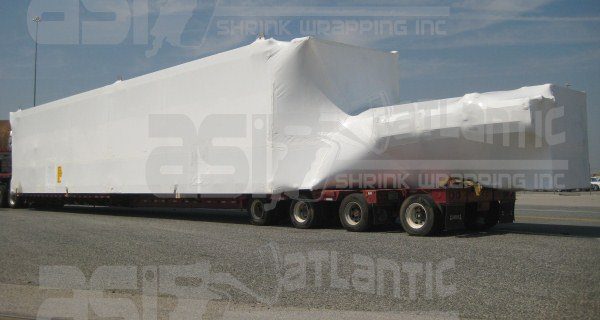
What Is Industrial Shrink Wrapping?
Industrial shrink wrapping is not the same as the shrink wrap you might use to seal a pallet of boxes. This is heavy-duty protection designed for large, valuable, and often irregularly shaped objects.
The process is simple in concept but takes skill to execute. We cover your equipment or structure with a specialized plastic film. Then we apply heat. The heat makes the film shrink tightly around the object, forming a smooth, drum-tight seal that conforms to every curve and corner.
The result is a weatherproof, dustproof, and tamper-evident barrier that can last for months or even years. Unlike tarps, which flap and leak, shrink wrap becomes part of the object it protects.
The Materials: Not All Shrink Wrap Is the Same
One of the first things to understand is that the material matters. We do not use the same film for every job.
- Standard polyethylene: Good for basic protection from rain and dust.
- Flame-retardant wrap: Essential for projects near welding, grinding, or other heat sources.
- VCI (volatile corrosion inhibitor) wrap: Emits a vapor that prevents rust on metal parts. This is critical for equipment being shipped overseas or stored in humid environments.
- Anti-microbial wrap: Helps prevent mold and mildew on items stored for long periods.
- UV-stabilized wrap: Blocks harmful UV rays, preventing fading and material degradation in items stored outdoors.
We also choose the thickness based on the job. Thicker films (up to 12 mil) are used for large, heavy, or delicate items that need maximum protection. Thinner films may be sufficient for shorter-term or less demanding applications.
What to Expect: The Process from Start to Finish
When you hire a professional industrial shrink wrapping service, here is how the process typically unfolds.
Step 1: Assessment and Planning
Every project starts with understanding your needs. We want to know what you are protecting, where it is going, how long it needs protection, and what risks it will face. Will it be transported cross-country? Stored outdoors for six months? Shipped overseas on a freighter?
Based on that assessment, we recommend the right materials and approach. We also identify any special considerations, such as sharp edges that need padding or sensitive areas that require extra care.
Step 2: Surface Preparation
Before the wrap goes on, the surface is prepped. We clean off any loose dirt or debris that could get trapped underneath. For delicate surfaces or historic materials, we use extra care and soft padding to prevent any damage.
Sharp edges and protruding parts are padded to prevent them from puncturing the film from the inside. This is a critical step. A puncture can compromise the whole wrap, especially during transport when the film is under stress.
Step 3: Applying the Wrap
We drape the film over the object or secure it around the load. The film is cut to size based on the measurements we took during planning. For large or complex shapes, we may use multiple pieces and seal them together.
Then comes the heat application. Using propane-fired heat tools, we carefully shrink the film. The heat is applied evenly across the surface, causing the film to contract uniformly. This creates that smooth, tight finish that industrial shrink wrap is known for.
Step 4: Sealing and Finishing
Once the film is shrunk, we seal all seams and openings with specialized tape or heat welding. The goal is a continuous, unbroken barrier. No gaps or loose edges.
If your project requires access during storage, we can add zipper doors or inspection windows. If ventilation is needed to prevent condensation, we install vents. These features are planned during the assessment phase and built into the wrap from the start.
Step 5: Final Inspection
Before we leave, we do a thorough inspection. We check for any weak spots, loose areas, or potential failure points. We want to be confident that the wrap will hold up in whatever conditions it faces.
How Long Does Industrial Shrink Wrap Last?
The lifespan of a shrink wrap depends on the materials used and the conditions it faces. A UV-stabilized wrap in a moderate climate can last a year or more. A standard wrap in harsh sun or extreme weather may have a shorter lifespan.
We design every wrap for the specific needs of your project. If you need long-term storage, we use materials and techniques that maximize durability. If you need temporary protection only for transport, we use an approach that balances protection with ease of removal.
Maintaining and Removing the Wrap
One of the benefits of shrink wrap is that it requires very little maintenance. If a small tear or loose area develops, it can often be repaired with patch tape or a quick heat seal. Periodic visual inspections are usually enough.
When it is time to remove the wrap, the process is straightforward. We cut along the seams and peel the film away. Because the wrap was applied cleanly, there is no residue left behind. Your equipment or structure is ready for use.
Why Professional Installation Matters
Anyone can buy shrink wrap and a heat gun. But doing it right takes experience. A poorly applied wrap can fail at the worst possible moment, on a highway in a rainstorm or halfway through an ocean crossing.
Professional installers understand how to:
- Choose the right material for the job
- Pad sharp edges to prevent punctures
- Apply heat evenly to avoid weak spots
- Seal seams properly to create a continuous barrier
- Work safely around sensitive or delicate items
We have been doing this since 2001. Our crews have wrapped items worth over $3 billion combined. We have worked for the U.S. military, nuclear power facilities, and private companies across the country. We know what it takes to get it right.
Is Industrial Shrink Wrapping Right for Your Project?
If you have equipment, machinery, or structures that need protection from weather, dust, moisture, or tampering, shrink wrapping is worth considering. It is cost-effective, customizable, and proven to work in demanding environments.
We travel anywhere in the country. Our crews are mobile, self-sufficient, and cleared for work at sensitive facilities. Whether you need a single piece of equipment wrapped or a multi-month storage solution for an entire job site, we can help.
Protect Your Investment with Professional Shrink Wrapping
Do not leave your valuable assets exposed to the elements. A professional shrink-wrapping job can now save you thousands in repair, downtime, and replacement costs.
Call Atlantic Shrink Wrapping Inc. today at 410-376-7052 or request a quote online. Let us discuss your project and build a custom protection plan that fits your needs.